


















Yoga Routine
Yoga stretches
NOTE: This routine takes 5-7 minutes. I do it 4-5 times daily. It relieves my hip and knee pain and actually causes me to “grow” about an inch taller. Completing the sequence every time I use the bathroom is a good reminder! 😄
Hugging Knees
I do this pose and sway my legs slightly right and then left ten times.

Legs Up Pose
I circle my arms around the back of legs and sway my legs slightly right and then left ten times.



Hip Circles
I circle my hips 10 times in each direction.

Back-bend Pose Facing a Wall
10 times, counting to ten each time. I keep my feet flat to get a better hamstring stretch.

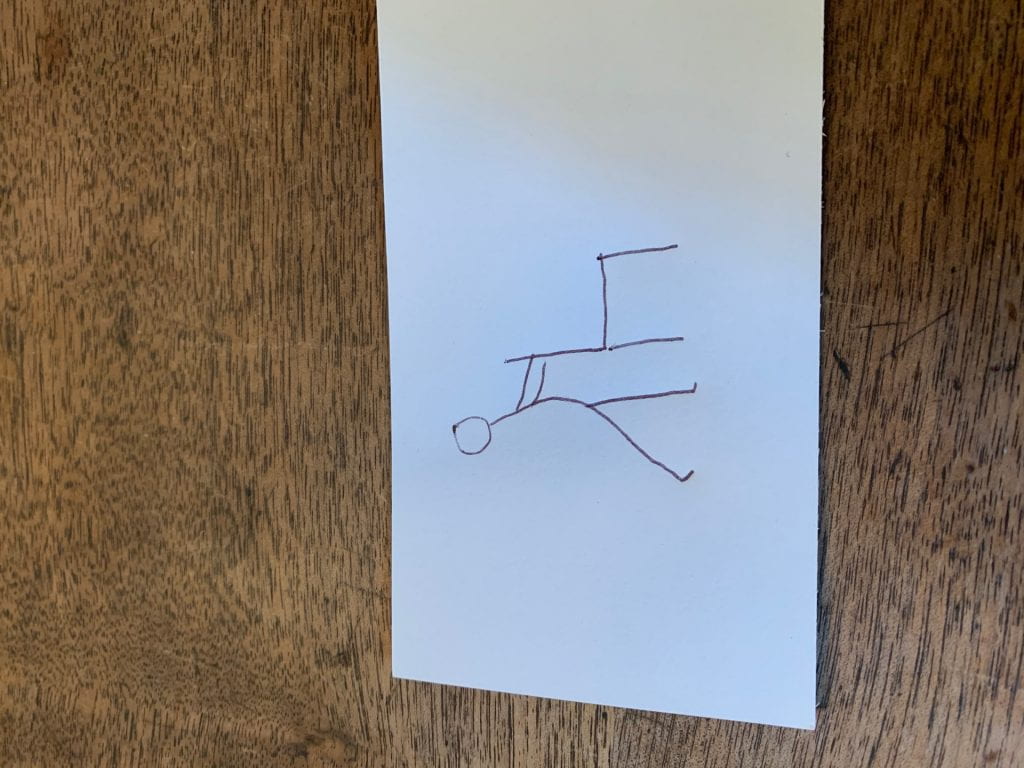
Back-bend pose against a chair back or counter
I do this pose 10 times, counting to ten each time, and alternating from leg to leg. I keep the foot of the weight bearing leg flat, and point the other foot back while arching my back into a gentle back bend. I put my hands on the sink counter for support. A chair back can also be used. Sorry about the picture I cannot get it to be in the right direction!
Dangerous “Information” Sources
Are you getting your information from any of these sites? You might be shocked to find out who is writing/sponsoring some of the articles showing up on your social media pages. I try to keep my Facebook page non-political – but I do have a few news sources that show up daily. They are liberal sources, so the fact that articles from the following extreme right-leaning sources even showed up, indicates how ubiquitous they must be. I suspect they might show up even more fequently on the pages of political conservatives.
The Epoch Times
From Wikipedia: “The Epoch Times is a multi-language newspaper and media extension of the Falun Gong new religious movement.[4][5] The newspaper is part of the Epoch Media Group, which also operates New Tang Dynasty Television (NTD).[6] For its articles, the publication draws from a network within China, as well as staff living in the West.[7][8][9]
RT (TV Network)
From Wikipedia: RT (formerly Russia Today) is a Russian government-funded international television network.[5][6] It operates pay television channels directed to audiences outside of Russia, as well as providing Internet content in English, Spanish, French, German, Arabic, and Russian.
The Washington Times
From Wikipedia: The Washington Times was founded on May 17, 1982, by Unification movement leader Sun Myung Moon and owned until 2010 by News World Communications, an international media conglomerate founded by Moon. It is currently owned by Operations Holdings, which is owned by the Unification movement.[4][5]
OANN – One America News Network
From Wikipedia: The OAN channel originally debuted in partnership with The Washington Times.[15] (see above. The Washington Times was founded by Sun Myung Moon – founder of The Unifaction Church) ….. OAN is known for downplaying threats posed to the United States by Russia. According to a former OAN producer, on his first day at OAN he was told, “Yeah, we like Russia here.”[8][59] One of OAN’s reporters, Kristian Brunovich Rouz, simultaneously works for the Russian propaganda outlet and news agency Sputnik, which is state-owned; when Rouz runs segments on OAN that relate to Russia, OAN does not disclose that he also works for Sputnik.[11]
Government by Laser Tag
We laugh about his stupidity. It is really dangerous to laugh. I am convinced twitler is NOT stupid. Ignorant, but not stupid. He has a plan. His comments are aimed at encouraging his racist base. His antics are carefully designed to remove our focus from one divisive move to the next outrageous stunt. He is using a laser pointer and laughing at all the “cute kittens” falling over themselves to chase the red dot. He is removing as many department heads as possible to gain power. He has a plan folks. He is not stupid. He is ignorant, divisive and EVIL.